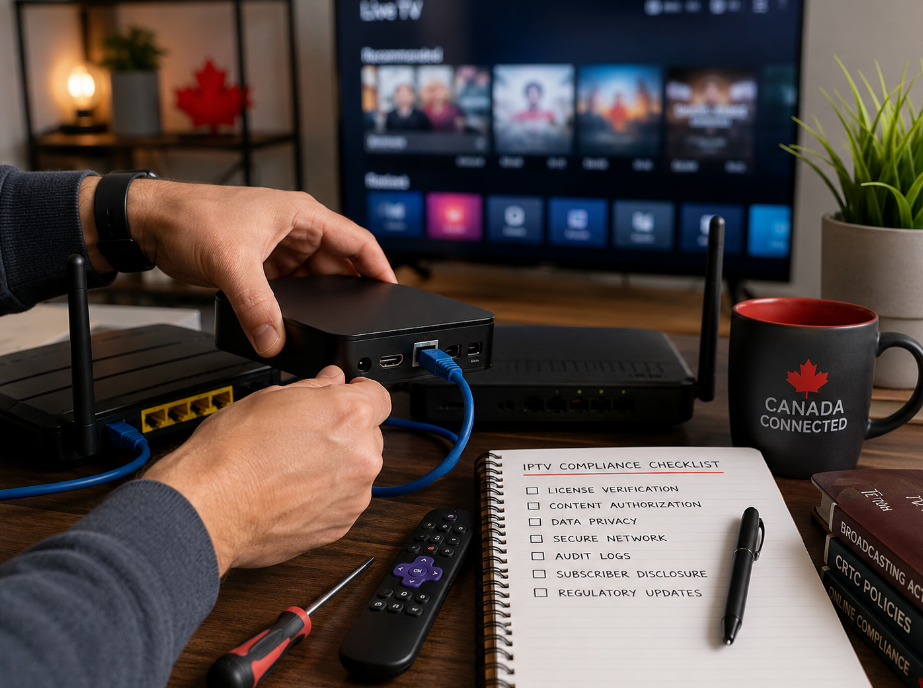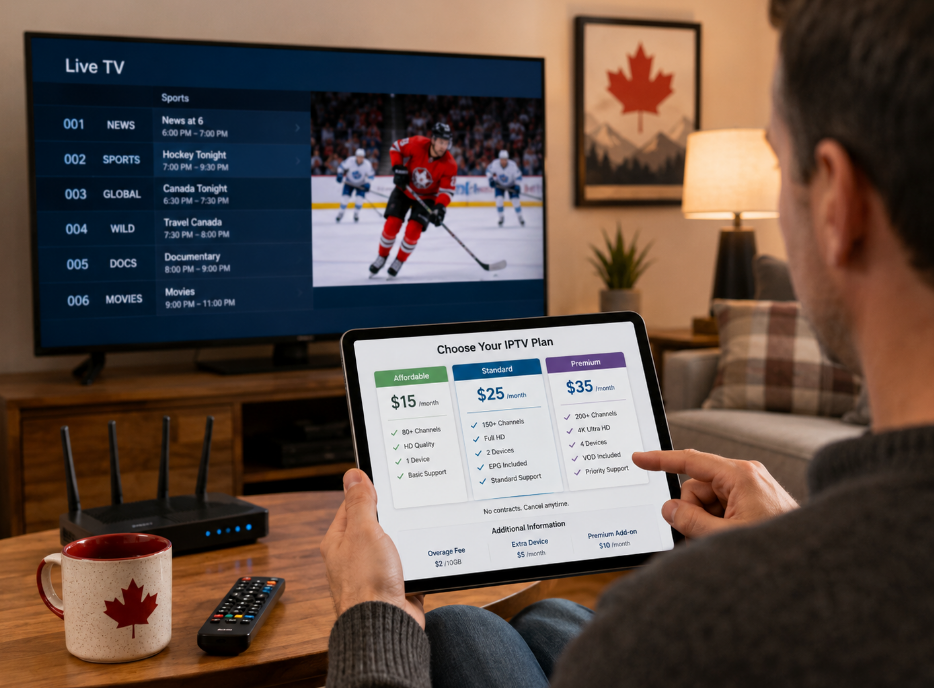
Lots of folks are asking lately: Is IPTV Canada even legal in Canada? You fire up a stream, everything looks slick, no ads, channels from all over — but something feels off. If your business is using IPTV Canada to cut costs or spice up your meeting rooms, it’s smart to double-check you're not stepping into hot water.
Truth is, not all IPTV services are created equal. Some are fully licensed and above board. Others? Let’s just say they’re skating on pretty thin ice. And for companies, that could mean fines, legal headaches, or a surprise service blackout in the middle of a presentation.
One Star IPTV engineer put it this way: "If a deal sounds too good to be true, it probably breaks copyright." Simple, but spot on.
Think of IPTV like buying a car. Some sellers give you keys and papers. Others pop the trunk and whisper, “Cash only.” Same product — totally different risks.
Is IPTV Canada legal under Canadian copyright law?
Legal foundations of IPTV in Canada under the Broadcasting Act
IPTV services in Canada operate under rules laid out in the Broadcasting Act.
The Act distinguishes between broadcasters and digital distributors, and IPTV often blurs that line.
IPTV’s legal standing depends on how the service delivers and who controls the content.
If you're distributing licensed content over a telecommunications network, the Act definitely applies.
The legal foundations tie back to Canadian policies on cultural content and domestic broadcasting priorities.
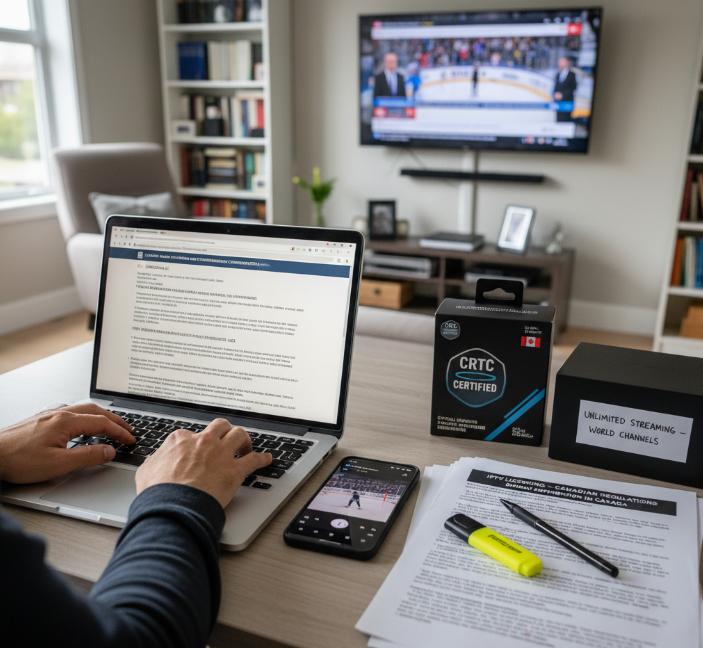
What role does the CRTC play in IPTV regulation?
The CRTC (Canadian Radio-television and Telecommunications Commission) oversees all things media, including IPTV.
IPTV providers that act like traditional broadcasters might need a CRTC license.
Some IPTV platforms try to fly under the radar by saying they're just “streaming” — but the CRTC doesn’t always buy that. (See recent Online Streaming Act implementation updates.)
The Commission balances tech innovation with enforcing existing telecommunications policy.
In short, if you're offering real-time TV, expect the CRTC to care.
How Canadian privacy laws apply to IPTV service data
Your Data = A Big Deal
IPTV platforms gather service data, which includes what you watch, when, and sometimes where. That’s a goldmine for personalization but a risk for privacy.
What PIPEDA Says
Canada’s PIPEDA law makes IPTV providers legally responsible for how they collect, store, and share personal information.
User Privacy Isn’t Optional
Any IPTV company offering user profiles, personalized recommendations, or voice control features must comply with Canadian privacy laws or risk major fines.
Streaming Doesn’t Mean Exempt
Streaming from a mobile phone or Smart TV? Your info is still being tracked, and PIPEDA still applies.
Key differences between legal and grey-area IPTV sources
Legal IPTV platforms are built around licensing agreements and legit distribution rights. You’ll usually find clear documentation about who owns the TV Shows, Sports, or Movies they offer.
In contrast, grey-area IPTV services often promise “unlimited everything” for dirt cheap. That’s your red flag. These sources typically skip the formal stuff like broadcasting licenses and copyright clearance, and rely on content scraping or piracy.
Here’s a quick way to spot the difference:
Legal: Follows Canadian broadcasting rules, pays for content, complies with CRTC.
Grey-area: Dodgy payment setups, unclear content origin, no service transparency.
When in doubt? Always check if the provider mentions source verification or Canadian regulation compliance.
7 key legal factors to check for IPTV services
Licensing and content rights for TV Shows and Sports
Wanna avoid nasty legal surprises? Then don’t skip licensing and content rights — they’re your legal insurance policy in the world of IPTV.

Licenses are your proof of right to show content — no license, no legal ground.
Pay attention to TV Shows and live Sports — they’re often where copyright enforcement hits hardest. (Example: GoldTV site-blocking order.)
Broadcasting regulations in Canada make content origin super important — even if the stream seems Canadian, it might not be.
Check provider terms: they should list which content is cleared for Canadian Broadcasting regulations.
No mention of licensing? That’s a 🚩.
The importance of Digital Rights Management in IPTV streaming
Let’s be real: pirates love IPTV. That’s why DRM is your best friend.
DRM (Digital Rights Management) stops people from stealing or duplicating streams — it’s built-in content protection.
Without encryption, your IPTV streaming source is vulnerable to leaks and playback hijacking.
Platforms that invest in DRM are usually playing by the rules — a good sign they’re taking copyright seriously.
Most legal services (think major providers) integrate DRM with adaptive bitrate streaming for smoother, secure viewing.
Bottom line: No DRM, no deal.
“At Star IPTV, we prioritize DRM not just for protection, but for proving to regulators and customers that we respect content rights.” — Tasha M., Head of Content Integrity, Star IPTV.
Understanding device compatibility: Smart TVs to Streaming Sticks
This one’s about saving you from tech headaches. Not all IPTV services love your devices equally — compatibility is key.
🟢 Short Bits to Keep in Mind:
Smart TVs (LG, Samsung) often run on proprietary systems — some apps may not install at all.
Streaming Sticks like Roku and Fire TV are usually easier to work with, but watch for app store restrictions.
Android TV boxes? Great flexibility, but sketchy platforms may come preloaded with unlicensed IPTV apps.
iOS users can get left behind — Apple’s App Store bans certain IPTV apps, even if they’re legal.
Before subscribing, make sure your chosen IPTV platform lists supported operating systems.
How Canadian consumer protection laws affect subscription models
IPTV subscriptions might feel like a steal — until you try to cancel one.
Here’s a quick breakdown of how consumer laws kick in:
| Subscription Type | Refund Policy (Legal Minimum) | Cancellation Terms | Common Issues |
|---|---|---|---|
| Monthly Plans | Required 14-day cancellation | Often immediate | Confusing renewal cycles |
| Annual Plans | Pro-rated refund may apply | 30-day notice may be needed | Auto-renew traps |
| Promo Trials | Must disclose end of trial | User must cancel | Hidden charges |
Canadian consumer protection laws demand clear contract terms, especially for auto-renewals.
Providers must disclose billing practices and refund policies.
Service agreements that lock users in with unclear terms? That’s a no-go.
Tip: Always screen the fine print — and screenshot your signup page.
Verifying compliance with IP-based service regulations
This is where things get techy — but don’t worry, here’s how to know if your IPTV provider is actually playing by the rules.
Check for CRTC registration: Legal IP-based IPTV services may need to comply with CRTC rules, especially if they resemble traditional broadcasters.
Review their stance on Net Neutrality: A good provider won’t throttle speeds or prioritize content unfairly under the Telecommunications Act.
Confirm data privacy policies: If they’re collecting your info (which they are), do they meet federal standards?
Make sure the provider is following the Telecommunications Act — especially if they distribute through Canadian broadband networks.
If in doubt, request compliance documentation — legal providers won’t flinch.
Worried about fines? How to verify IPTV providers legally
Identifying licensed IPTV services offering Movies and News
Want to stream News or Movies legally? Here's how to check if an IPTV service is legit.
Look for official content licensing badges or CRTC disclosures — they're like backstage passes for licensed IPTV services. (See the CRTC’s information-gathering and registration notices for online streamers.)
Check that the service clearly separates free content from premium News or blockbuster Movies.
Be skeptical of “unlimited access” to brand-new releases without any licensing notice — that’s a neon red flag.
Quick call test: If you call support and they fumble over “broadcasting regulations,” walk away.
Remember, if it's too good to be true, it's probably streaming dirty.
Red flags in Pay-per-view and Catch-up TV offerings
Sketchy Pay-per-view or Catch-up TV offers? Here’s what might be screaming “illegal.”
Suspicious pricing — If you’re seeing $3 for major live fights, that’s a red flag.
Inconsistent availability — Shows appearing before they air officially = unlicensed content.
No copyright disclaimers — Legit services always include usage rights info.
Popup ads galore — Loaded interfaces often point to illegal streams.
No clear refund/cancellation policy — Classic sign of fly-by-night operations.
Watch for these — or risk stepping right into a copyright infringement mess. (Courts have already backed site-blocking of pirate IPTV like GoldTV.)
Checking provider transparency in rural and urban areas
| Provider Name | Area Served | Legal Info Visible? | Full Contact Provided? |
|---|---|---|---|
| StreamClearTV | Urban Areas | Yes | Yes |
| NorthNet IP | Rural Areas | No | No |
| CanView IPTV | Nationwide | Yes | Yes |
If you can’t find the service agreement or contact information, that's not just shady — it’s probably not legally compliant.
Avoiding risk with unlicensed Set-top Box packages
That cheap Set-top Box deal? It might be a Trojan horse.
Unlicensed Set-top Box bundles often come preloaded with shady apps giving access to pirated content. But here’s the kicker: many carry malware or introduce security vulnerabilities into your home or office network. It’s not just about copyright — you’re opening the door to hackers, data theft, and possibly legal consequences if employees stream through these devices in a corporate environment. If the box doesn’t name a licensed IPTV provider or skips software update support, consider it an instant “nope.”
Cross-checking providers using CRTC and Telecommunications Act data
Here’s how to get past marketing fluff and into legal fact-checking.
CRTC Lookup
Head to the CRTC’s database and search the provider name. No listing? Big issue.
Telecom Filing
Check for listings under the Telecommunications Act. Many streaming services also file here.
License Validation
If you can't validate the provider’s broadcasting rights, assume they’re skating the edge. (Canada has even implemented contribution requirements for online streamers under the modernized framework.)
Regulatory History
Dig into their public filings — lawsuits, CRTC violations, or shady “under review” tags are huge no-go signs.
“Transparency and license clarity aren’t extras — they’re essentials,” says Lina DeCosta, Legal Compliance Lead at Star IPTV.
Creating an internal verification checklist for corporate IPTV usage
Using IPTV in the office? Don't risk your company’s name — build a smart checklist.
✅ Confirm content authorization from the IPTV vendor
✅ Review and archive service agreements for proof of compliance
✅ Restrict usage to licensed platforms only (especially for Music and Educational Content)
✅ Create an employee training module explaining dos and don’ts
✅ Implement IPTV usage policies into IT compliance manuals
A clear internal verification checklist turns IPTV risk into peace of mind.
Province-by-province rules for IPTV streaming legality
A quick look into how IPTV rules differ across Canada — because things aren’t the same in every province or territory.
Eastern Canada: Regulation updates for Streaming and Subscription platforms
Some key takeaways on Eastern Canada IPTV rules:
The CRTC closely monitors Streaming and Subscription platforms in Quebec and Atlantic provinces.
There’s strong push for local content quotas in both English and French.
Licensing matters — if your service isn’t following Copyright law, expect issues.
Subscription services must clearly show cancellation policies and user rights.
Localized language preferences can influence content approval, especially in Quebec.
Western Canada: IPTV usage trends in major cities
IPTV is booming across major cities in Western Canada.
1. Vancouver and Calgary are showing rising demand for multi-device Streaming services.
2. A surge in Mobile Phone and Gaming Console users has reshaped content delivery expectations.
3. Pay-per-view Sports and Reality TV content dominate subscriptions.
4. Market analysis shows users in British Columbia prefer platforms with better Parental Controls.
5. Consumer behavior studies show increasing skepticism of unlicensed IPTV apps.
Northern Canada: Connectivity limits and broadband regulation
In Northern Canada, Streaming isn’t always smooth sailing. The CRTC’s broadband regulations highlight how remote communities face real challenges with IPTV access. Bandwidth caps and high latency make Adaptive Bitrate Streaming a must. Subscription services often fail here due to weak Broadband infrastructure.
To fix this, several ISPs are rolling out localized Content Delivery Networks. Still, coverage gaps remain — making full access to TV Shows and Live TV nearly impossible in some spots.
Central Canada: Legal risks in unlicensed Kids Programming content
Risk #1: Unlicensed Kids Programming violates Copyright law — even if it’s free.
Risk #2: Many IPTV bundles ignore Canadian content regulation standards.
Risk #3: Child protection policies are tight — unvetted content can trigger serious complaints.
Risk #4: Ontario has flagged over 20 services for copyright infringement in cartoons.
Tip: If a platform offers every animated show ever made for a suspiciously low fee, it’s likely illegal.
Territorial guidance on Smart TVs and Gaming Consoles
What devices are okay?
✅ Smart TVs preloaded with official IPTV apps
✅ Streaming Sticks like Roku with CRTC-approved channels
❌ Jailbroken Gaming Consoles used for pirated streams
✅ Set-top Boxes from telecom providers with legal access
Device Compliance Summary (Territories)
| Device Type | Legal Use Case | Risk Factor | CRTC-Compliant? |
|---|---|---|---|
| Smart TV | Pre-installed official apps | Low | Yes |
| Gaming Console | Unofficial third-party app installations | High | No |
| Streaming Stick | Uses app store, avoids sideloading | Medium | Yes |
| Set-top Box | Provided by licensed IPTV provider | Low | Yes |
How provincial privacy laws affect Personalized Recommendations
IPTV platforms love giving Personalized Recommendations — but that means collecting your data. And guess what? Privacy rules aren't the same across Canada.
In Alberta and BC, provincial privacy laws add extra rules beyond PIPEDA.
Quebec now requires clear opt-ins for data collection — especially for features like User Profiles.
Ontario allows personalization but requires an easy opt-out option.
"Consumers don’t mind personalization — they mind being tricked," says Ellie Tran, a data engineer at Star IPTV. “Transparency builds trust, and trust keeps customers.”
Comparing IPTV regulation strength across Canadian regions
Western Canada: Generally more flexible, but cracks down hard on illegal Sports streaming.
Eastern Canada: Strongest content regulation, especially in Quebec — language and local content rules.
Central Canada: Moderate enforcement with high awareness, especially in Ontario’s urban centers.
Northern Canada: Light regulation due to infrastructure limitations, but piracy isn’t overlooked.
Territories: Device compliance takes priority over content curation.
Each region dances to its own legal tune — so providers need to check local rules, not just federal ones.
Meeting rooms: safe streaming practices for company presentations
When it comes to using IPTV in meeting rooms, safe streaming isn’t just about good Wi-Fi—it’s about keeping your company, your people, and your data protected.
1. Smart tips for a secure streaming setup
Stick to verified IPTV services: Use legal platforms that comply with Canadian copyright laws—avoid shady apps offering “free” Pay-per-view content.
Enable privacy protocols: Turn off personalized ads or viewing history tracking on devices used in shared spaces.
Protect your network: Set IPTV devices to a guest or isolated VLAN to avoid interference with sensitive company networks.
Use strong access controls: Lock IPTV apps behind a PIN or admin login—especially important when using Smart TVs in boardrooms.
Manage devices centrally: Keep tabs on all IPTV-enabled equipment like Streaming Sticks or Set-top Boxes through IT dashboards.
2. Easy checklist: 5 must-dos before any company presentation
Check the licensing – Make sure the IPTV service has the rights to show the content (especially for News, Documentaries, or Music).
Secure your connection – Always stream over encrypted networks; public Wi-Fi is a no-go.
Turn off voice controls – Voice search features might record sensitive speech; disable them in meeting rooms.
Use user profiles wisely – If your system supports User Profiles, use guest accounts to avoid privacy leaks.
Clear the content queue – Remove personal or unrelated content from the recently watched list before streaming in front of a group.
3. Real talk from the inside – how IPTV pros handle boardroom streaming
Kyle Banerjee, Systems Engineer @ Star IPTV Canada
"Most streaming problems in business settings happen because folks treat office setups like their living rooms. We train clients to lock down IPTV features the same way they lock down file servers."
Sophie Lam, Senior UX Manager @ Star IPTV
"We actually design meeting room interfaces with default content filters and no cloud sync. It keeps things simple and clean—and legal."
Ben Tran, VP of Compliance @ Star IPTV
"You’d be surprised how many companies forget that public broadcasting of licensed IPTV—even in internal meetings—needs proper usage rights. We always remind clients: play it safe, or pay later."
4. Common IPTV devices and how to lock them down safely
| Device Type | Risk Level (1–5) | Recommended Settings | Notes for IT Teams |
|---|---|---|---|
| Smart TVs | 3 | Disable voice control, clear cache | Set admin PIN and disable auto-logins |
| Streaming Sticks | 4 | Use guest mode, restrict apps | Update firmware regularly |
| Set-top Boxes | 2 | Enable parental controls | Keep vendor documentation handy |
| Gaming Consoles | 5 | Disable store access | Block content store in firewall config |
5. Quick wins for privacy and legal compliance in boardroom IPTV
Use parental controls, even for grownups
It’s not just for kids. Parental controls let IT teams lock out sketchy channels and block inappropriate shows—like Reality TV during a quarterly earnings call.
Be picky with what’s plugged in
Don’t let anyone walk into your meeting room with a random USB stick or Streaming Media Player. Unauthorized devices are a big privacy risk.
Document usage rules
Include IPTV usage in your office tech policies. Make sure staff know what’s cool to stream (Educational Content, News, maybe Kids Programming for training), and what’s off-limits (Sports replays from unverified sources).
Company presentations should look good and run smooth—but not at the cost of privacy or legality. Stay sharp with verified IPTV Canada services, keep those network security layers tight, and run your meeting rooms like you mean it.
Conclusion
It’s clear now that IPTV Canada isn’t a legal grey zone—as long as you’re going with a legit provider. For anyone sourcing IPTV in bulk for offices, hotels, or public spaces, playing by the rules isn’t just a smart move—it’s a must. You don’t want fines sneaking up on you like a bad winter storm.
Here’s the quick and dirty:
Get licensed content only—especially for Sports and News (remember the GoldTV injunction precedent).
Stick to vetted hardware like Smart TVs or set-top boxes.
Don’t touch those “too good to be true” streaming deals.
As Michael Geist, a Canadian internet law expert, puts it: “Digital access doesn’t mean digital lawlessness—our rules still apply, just in new ways.” Stick with IPTV services that keep things clean, legal, and future-ready. If you're stocking up, make sure you’re not just buying streams—you’re buying peace of mind.
References
Broadcasting Act (S.C. 1991, c. 11) – https://laws-lois.justice.gc.ca/eng/acts/b-9.01/
CRTC – TV and Radio for Canadians – https://crtc.gc.ca/eng/television/
CRTC – Licences (Issue, renew and amend) – https://crtc.gc.ca/eng/industr/licences.htm
Office of the Privacy Commissioner of Canada – PIPEDA requirements in brief – https://www.priv.gc.ca/en/privacy-topics/privacy-laws-in-canada/the-personal-information-protection-and-electronic-documents-act-pipeda/pipeda_brief/
Justice Laws – Personal Information Protection and Electronic Documents Act – https://laws-lois.justice.gc.ca/eng/acts/p-8.6/
CRTC – Registration for online streaming services – https://crtc.gc.ca/eng/industr/modern/registr.htm
CRTC – Revised list of non-Canadian programming services authorized for distribution – https://crtc.gc.ca/eng/publications/satlist.htm
Reuters – Canada says online streaming services must hand over 5% of their domestic revenues – https://www.reuters.com/business/media-telecom/canada-says-online-streaming-services-must-hand-over-5-their-domestic-revenues-2024-06-04/
CIRA – Federal Court of Appeal upholds Canada’s first-ever website blocking framework (GoldTV) – https://www.cira.ca/en/resources/news/state-of-internet/federal-court-appeal-upholds-canadas-first-ever-website-blocking-framework/
Government of Canada – Online Streaming Act (Bill C-11) overview – https://www.canada.ca/en/canadian-heritage/services/modernization-broadcasting-act.html
FAQ
Is IPTV Canada legal to use in every province?
IPTV rules don’t look the same across Canada. Some areas are more strict, while others focus less on it.
Eastern provinces push for licensed, local content
Western cities offer more variety, but check your provider
Northern areas often face service gaps
Central Canada has rules around Kids and Educational shows
Territories still follow national law but less enforcement
What features should businesses look for in a legal IPTV service?
If you’re picking IPTV for the office, these features help you stay on the safe side:
User access controls like Profiles or Parental Controls
Cloud DVR for recorded content that doesn’t breach rights
Licensed Sports and News channels
Custom channel bundles without sketchy add-ons
DRM tech that prevents illegal copying
Does CRTC regulate IPTV Canada services directly?
CRTC doesn’t cover every IPTV Canada service. It usually steps in when the platform acts like a traditional broadcaster or distributes licensed content without permission.
How can I tell if an IPTV provider is legally licensed?
A legal provider usually checks these boxes:
They’re listed with the CRTC or follow known rules
They show content rights for Sports, TV Shows, etc.
They don’t bundle suspicious Set-top Boxes
They offer clear terms and refund policies
They avoid streaming pirated Movies or PPV events
Can IPTV Canada services be used in corporate meeting rooms?
Yes, but use trusted platforms. Stick to News or Educational content, and stream from company-approved devices like Set-top Boxes or Smart TVs only.
Which devices support compliant IPTV usage in Canada?
Some devices are safer and more reliable for legal IPTV access:
Smart TVs with official app stores
Streaming sticks from known brands
ISP-issued Set-top Boxes
Consoles that block unauthorized apps
Media players that support legal services only
What are the risks of using unverified IPTV providers?
You could get fined, end up with malware, or lose your data. These services often stream content like Live TV or Movies without permission — and you’re the one who takes the risk.
Are subscription-based IPTV Canada services safer than free ones?
Yes — paid services usually play by the rules. Here’s why:
They offer licensed Movies and News
They provide legal user accounts and billing
They show where their content comes from
They follow privacy rules
They’re easier to contact if something goes wrong
Do IPTV services in Canada need to follow privacy laws?
Yes. If the service collects user info — for things like Personalized Recommendations — it needs to follow Canada’s privacy laws and rules about storing and sharing personal data.
What type of content is most legally sensitive when streaming IPTV?
Some types of content get flagged more often:
Live Sports, especially exclusive events
Pay-per-view for recent Movies
TV shows airing before official Canadian release
Music or Reality TV without clear licenses
Kids Programming that breaks ad rules