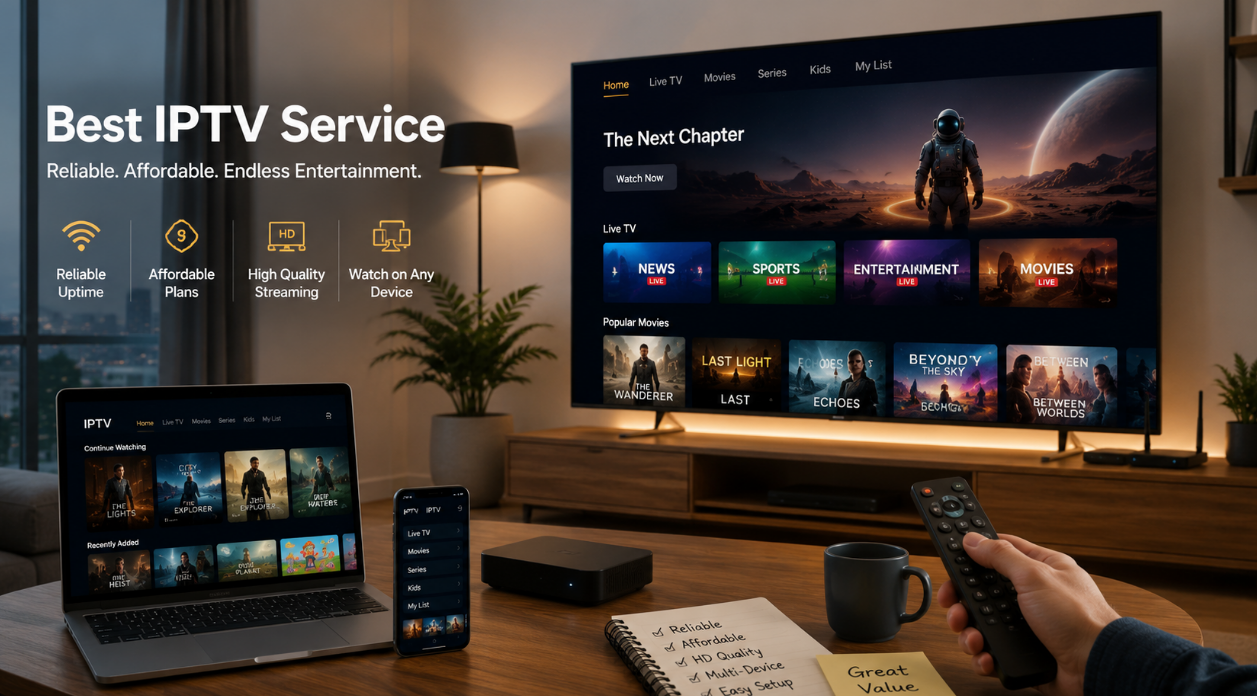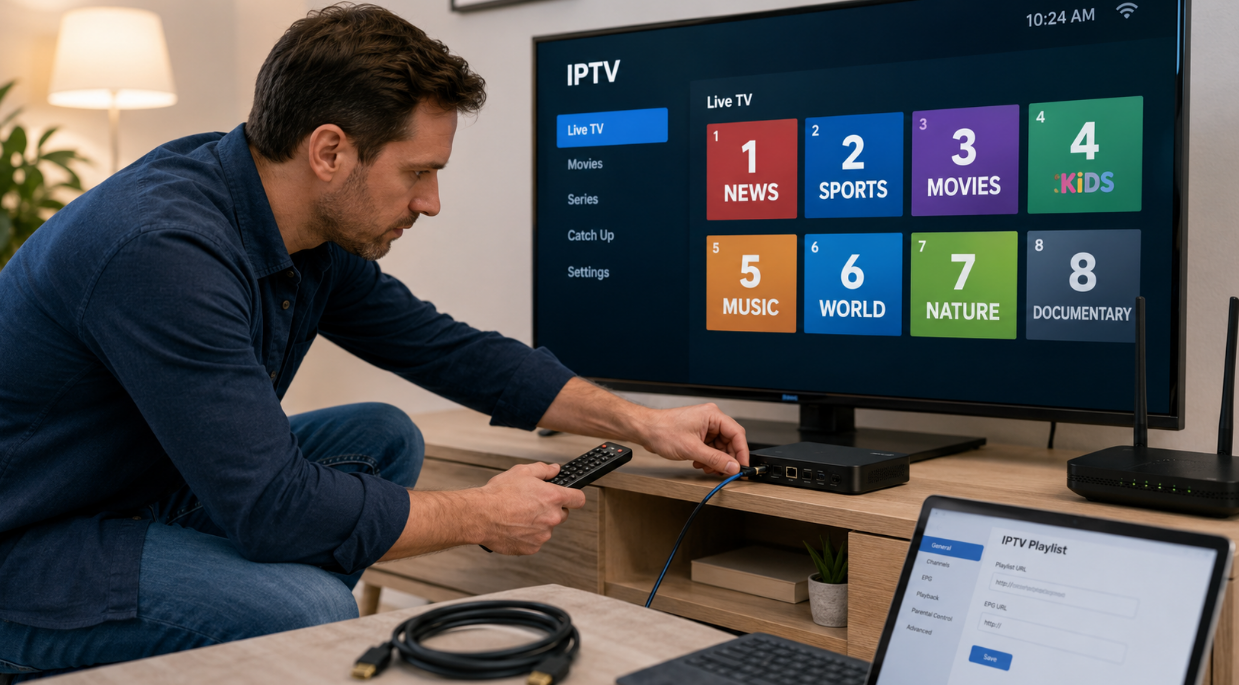
iptv platforms are no longer side projects; they’re the backbone of modern TV delivery, and if your network hiccups, customers bolt.
In its 2025 technical overview, Startiptv engineers state that managed infrastructure and strict SLA oversight are essential for carrier-grade reliability, emphasizing controlled IP networks over open internet routes.
That’s the play: pick a platform built to scale, secure content, and keep viewers glued when traffic spikes hit hard nationwide.
Key Points: IPTV Platforms in Focus
Carrier-grade platforms
Choose carrier-grade platforms with managed infrastructure, strict SLAs, and private IP networks to ensure seamless scalability and reliability.
End-to-end solutions
Leverage end-to-end solutions—headend equipment, CDN nodes, middleware, CMS, and DRM—to secure content and streamline subscriber management.
Network essentials
Prioritize network essentials like fiber backbones, multicast routing, QoS, and load balancing for high concurrency and uninterrupted streaming.
Platform models
Compare managed, cloud-based, and open-source IPTV models to match budget, customization needs, and in-house expertise.
What Exactly Are Modern IPTV Platforms?
Modern iptv platforms blend hardware, software, and IP networks into one smooth TV engine. From signal intake to playback on your couch, today’s IPTV platform setups feel simple on the outside but run on layered systems underneath.
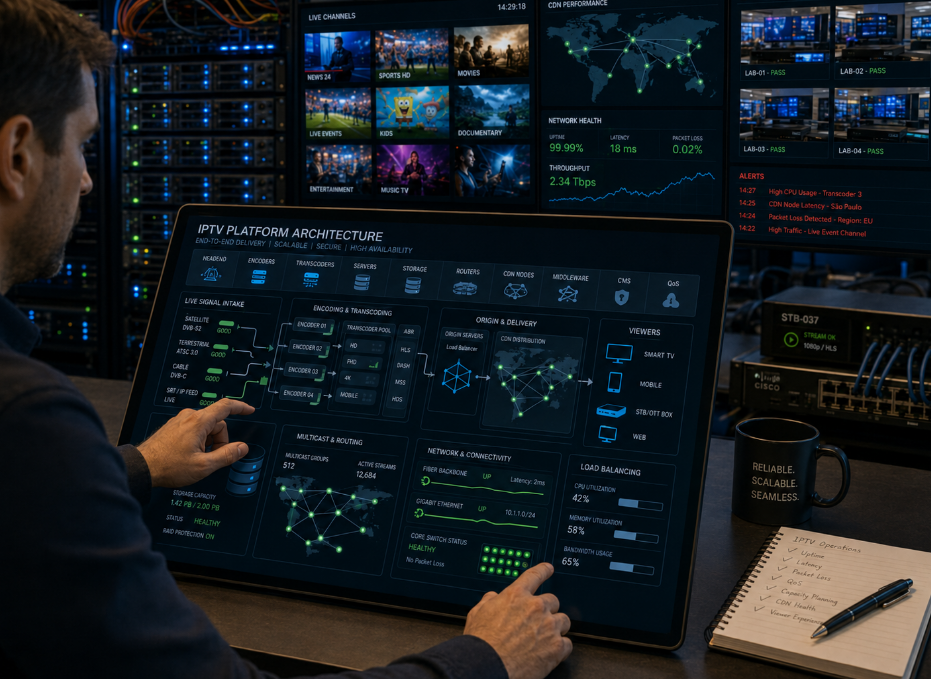
Key Hardware Components: Headend Equipment to CDN Nodes
Modern iptv platforms rely on tightly connected hardware blocks:
Content Intake Layer
Headend systems receive satellite or fiber feeds.
Encoders compress raw signals into digital streams.
Transcoders adjust formats for different IPTV devices Canada.
Processing & Storage Core
High-performance Servers manage live and on-demand traffic.
Scalable Storage arrays host VOD libraries.
Distribution Edge
Smart Routers steer traffic across IP networks.
Regional CDN nodes cache content closer to users for low latency.
This is how IPTV systems keep buffering low and uptime high. Brands like Startiptv build their iptv platforms around optimized hardware mapping so streaming feels instant, not clunky.
Core Software Solutions: Middleware, CMS, and DRM
Inside iptv platforms, software runs the show:
Service Control Layer
Middleware connects apps, users, and streams.
Billing system modules handle plans and renewals.
Content Operations
CMS tools organize libraries.
VOD platform engines manage playback logic.
Live streaming schedulers sync channels.
Protection & Insights
DRM encrypts streams.
Analytics track viewer behavior.
Startiptv integrates these IPTV services into one clean dashboard, keeping iptv platforms easy to manage without messy patchwork tools.
Network Infrastructure Essentials: QoS, Multicast Routing, and Load Balancing
Strong iptv platforms stand on solid IP networks:
Transport Foundation
Fiber optics ensure high Bandwidth.
Optimized Network protocols stabilize delivery.
Traffic Intelligence
Multicast routing reduces duplicate streams.
QoS prioritizes video packets over background data.
Stability Layer
Load balancing spreads traffic across servers.
Redundant IP networks prevent outages.
When all three layers sync up, iptv platforms scale smoothly. That’s the backbone Startiptv focuses on—stable IPTV platform performance that just works, even when traffic spikes.
Types Of IPTV Platforms
IPTV platforms come in different flavors, and picking the right setup can save time, money, and a ton of stress. From fully managed IPTV services to cloud IPTV platforms and open-source IPTV platforms, each model shapes how your IPTV system runs, scales, and earns. Let’s break down how modern iptv platforms really work.

Managed IPTV Services
Managed IPTV services suit businesses that prefer outsourcing the heavy lifting to a third-party provider.
Core Operational Model
Integrated billing via OSS/BSS
Access to deep operational expertise
Binding service level agreement terms
24/7 technical support backed by measurable SLAs
Headend systems handled through full infrastructure management
CDN nodes optimized for stable content delivery
Infrastructure Layer
Service Governance
Business Operations
Why Businesses Choose Managed IPTV Platforms
Reduced internal staffing pressure
Predictable OPEX instead of CAPEX
Faster deployment of IPTV platforms at scale
Ideal Users
ISPs entering IPTV service markets
Hotels and telecom operators
Brands like Startiptv that want reliable IPTV systems without building from scratch
Managed iptv platforms in this format deliver control without day-to-day complexity.
Cloud-Based IPTV Solutions
Cloud IPTV platforms run on distributed data centers using virtualization to separate hardware from software.
Technical Architecture
Secure remote access management
Multi-device IPTV service delivery
Global CDN routing
High scalability and traffic balancing
Elastic compute powered by software as a service
Media processing through platform as a service
Virtual Layer
Distribution Layer
Access Layer
Business Advantages
True elasticity during traffic spikes
Subscription pricing lowers capital costs
Rapid launch of new IPTV platforms
Operational Flow
Upload content
Cloud transcodes streams
CDN distributes globally
Users access IPTV service instantly
Cloud-based iptv platforms feel flexible and fast, especially for startups or expanding IPTV service providers.
Open-Source IPTV Platforms
Open-source IPTV platforms rely on public source code and strong community development.
Foundation Structure
Security depends on internal policies
Performance tuning handled in-house
Full self-hosting control
Deep customization options
Transparent repositories
Active developer community updates
Development Base
Deployment Style
Governance
Key Benefits
Maximum flexibility
Strong transparency in architecture
Cost savings compared to commercial IPTV platforms
Real-World Considerations
Requires skilled engineers
Ongoing maintenance is not optional
Security hardening must be continuous
For brands like Startiptv exploring scalable iptv platforms, open-source IPTV systems offer freedom—but only if the team can manage the load.
Across all iptv platforms—managed IPTV platforms, cloud IPTV platforms, and open-source IPTV platforms—the right choice depends on control, budget, and long-term IPTV service strategy.
4 Factors For Evaluating IPTV Platforms
Choosing among today’s iptv platforms isn’t just tech talk—it’s about speed, features, safety, and smooth management. If your IPTV platform can’t scale or protect content, users bounce fast.
Scalability through Fiber Optic Cables and Gigabit Ethernet Switches
Strong iptv platforms stand on serious pipes and switches. Under the hood, growth depends on layered network infrastructure:
Core Transmission Layer
1.1 Fiber optic cables handle long-distance data transmission with minimal loss.
1.2 High-capacity links secure steady bandwidth for HD and 4K streams.
Distribution Layer
2.1 Gigabit Ethernet switches manage local traffic flow.
2.2 Smart routing improves network scalability across regions.
Edge Delivery
3.1 CDN nodes shorten content paths.
3.2 Adaptive bitrate keeps streams stable during traffic spikes.
When IPTV services scale this way, users barely notice expansion—it just works. That’s how platforms like Startiptv maintain steady performance even as subscribers climb.

Feature Set: VOD Platform, EPG Software, and Interactive TV Apps
An IPTV platform lives or dies by features. A solid feature set inside modern iptv platforms often includes:
Advanced VOD platform with searchable libraries
Smart EPG software for real-time scheduling
Custom interactive TV apps for multi-screen use
Then it goes deeper:
Content Experience
1.1 Personalized suggestions
1.2 Time-shift and catch-up TV
Control Tools
2.1 Parental filters
2.2 Multi-device sync
Short story? Better content delivery equals better user experience. That’s why IPTV systems with strong app design keep viewers hooked.
Security & Compliance: Encryption Standards and Digital Watermarking
Security keeps iptv platforms alive. No shortcuts here.
Strict encryption standards
Layered access control
Real-time cybersecurity checks
Protection stack inside reliable IPTV services:
Content Shield
1.1 DRM enforcement
1.2 Digital watermarking for traceability
Data Safety
2.1 User identity protection
2.2 Compliance with regulatory compliance rules
“Global entertainment and media industry revenue is projected to grow to $3.5 trillion by 2029,” noted Reuters coverage of PwC’s 2025 Global Entertainment & Media Outlook.
That push makes sense. Content theft kills margins fast.
Service Management: OSS/BSS, Performance Monitoring, and CRM
Behind polished iptv platforms sits heavy-duty coordination powered by OSS/BSS and service management systems.
Operational Core
Operational support systems for provisioning
Business support systems for billing
Performance Control
Real-time performance monitoring
KPI dashboards tracking service quality
Customer Growth
Integrated CRM tools
Targeted lifecycle campaigns
This layered setup keeps IPTV platforms steady from signup to renewal. Startiptv aligns these systems tightly, blending customer relationship management with analytics so operators can scale smart without chaos.
Unreliable Streams? IPTV Platforms With SLA Guarantees
If your match turns into a slideshow, it’s not “just the internet.” This cluster breaks down how iptv platforms earn real SLA trust: redundancy, smarter ops, and bandwidth discipline—without the hand-waving.
High-Availability CDN Nodes for Stream Redundancy
In iptv platforms, uptime starts with high-availability design, not luck. With Startiptv, the aim is simple: keep video flowing even when gear fails or traffic spikes.
CDN layer
nodes placed close to viewers for faster content delivery
active/active routing so a dead edge doesn’t kill the stream
Origin and storage
replicated network paths back to origin
mirrored caches to cut single points of failure
Headend and transport
failover encoders and backup ingest for fault tolerance
redundancy rules that prioritize continuity over perfect quality
That’s how iptv platforms keep redundancy real: fewer stalls, fewer angry chats.
Proactive Troubleshooting Tools and Configuration Management
Good iptv platforms don’t wait for complaints; they stay proactive. Startiptv typically treats every glitch as a breadcrumb.
Live monitoring that flags drift in latency, errors, and join time
diagnostics that trace a problem from player to edge, then back to origin
automation for alerts that page the right on-call, not the whole company
configuration management to stop “one tiny change” from breaking a region
Detect the anomaly fast.
Isolate the blast radius.
Roll back configs cleanly, then patch forward.
That’s the difference between “we’re looking into it” and service coming back now.
End-to-End Bandwidth Provisioning and QoS Commitments
SLA talk is cheap unless end-to-end planning backs it up. In iptv platforms, Startiptv focuses on predictable delivery by lining up bandwidth provisioning with strict QoS.
Capacity planning
network capacity reserved for peak events, not average days
CDN egress headroom so hot channels don’t starve others
Packet treatment
quality of service rules that prioritize video over bulk downloads
traffic shaping to smooth bursts and reduce jitter
Delivery efficiency
multicast tuning where it actually fits, to cut duplicate streams
SLA commitments written around measurable latency, jitter, and uptime
When iptv platforms get these basics right, the stream feels boring—in the best way.
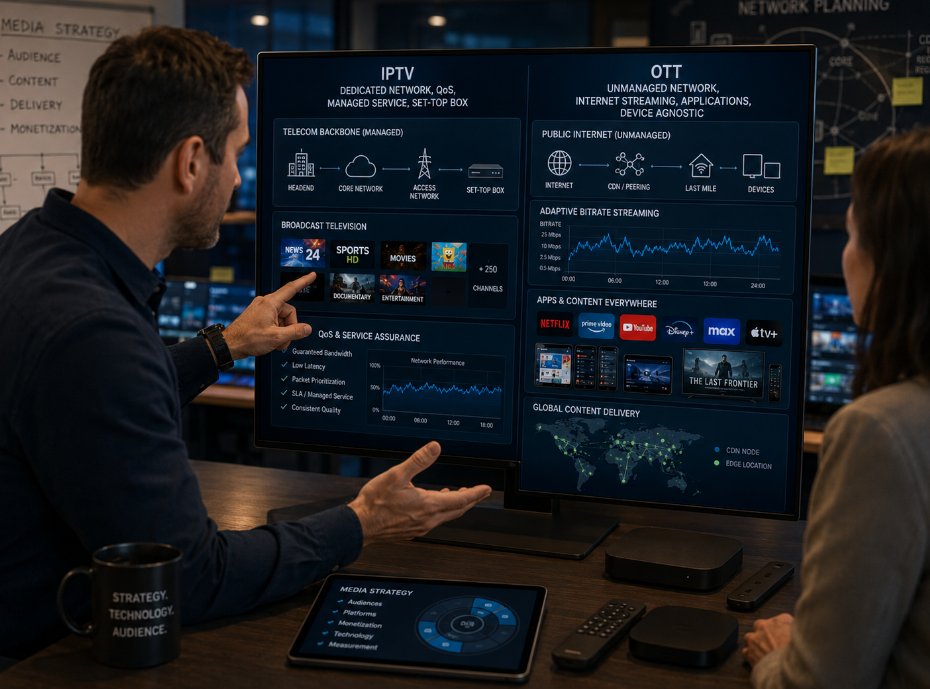
IPTV Vs. OTT: Which Platforms Suit You?
Choosing between iptv platforms and OTT options can feel like picking sides in a tech showdown. Both run on IP, yet the way each iptv platform handles delivery, control, and access makes a real difference in daily viewing.
IPTV
When people talk about iptv platforms built for control, this is what they mean.
Core Network Structure
Dedicated network
powered by telecom-grade infrastructure
Managed routing inside a Telecommunication backbone
Traffic prioritised through Quality of Service rules
Centralised monitoring
Operator-level bandwidth allocation
Fault detection before viewers even notice
Service Environment
Delivered as a
Managed service
Installed via a certified Set-top box
Linked to household broadband lines
Built around Linear programming and Broadcast television grids
For viewers comparing iptv platforms, IPTV feels stable and predictable. No random buffering spikes. That’s why many iptv services used by hotels, hospitals, and telecom bundles stick to this model. If stability matters most, brands like Startiptv bring that managed experience into modern iptv platforms without making setup a headache.
OTT
OTT runs differently, and iptv platforms that blend OTT features often do it for flexibility.
Delivery Model
Runs over an
Unmanaged network
Distributed through global Content delivery nodes
Uses adaptive bitrate Internet streaming
Viewing Style
Focus on On-demand content
Access through mobile and smart TV Applications
Fully Device agnostic with Global accessibility
Many iptv platforms now merge IPTV control with OTT freedom. An iptv platform that supports both live grids and streaming platforms gives users the best of both worlds. Startiptv sits right in that sweet spot, offering iptv platforms that balance structure with streaming ease.
References
[ITU-T IPTV Standards Development - https://www.itu.int/dms_pub/itu-t/oth/26/06/T26060000030034PDFE.pdf]
[ITU-T Rec. G.1080 Quality of Experience Requirements for IPTV Services - https://www.itu.int/rec/dologin_pub.asp?id=T-REC-G.1080-200812-I!!PDF-E&lang=e&type=items]
[ITU-T H.725 IPTV Terminal Device Virtualized Model - https://www.itu.int/rec/dologin_pub.asp?id=T-REC-H.725-202406-I!!PDF-E&lang=s&type=items]
[Microsoft Digital Rights Management Features - https://learn.microsoft.com/en-us/windows/win32/wmformat/digital-rights-management-features]
[Reuters: AI-powered ads to drive growth for global entertainment and media industry, PwC says - https://www.reuters.com/business/media-telecom/ai-powered-ads-drive-growth-global-entertainment-media-industry-pwc-says-2025-07-24/]
[Ant Media: What is OTT Streaming? Over-The-Top Explained - https://antmedia.io/what-is-ott/]
[Castr: What is the Difference Between IPTV and OTT? - https://castr.com/blog/iptv-vs-ott/]
FAQ
What core components power large-scale IPTV platforms?
Behind every stable stream is a layered structure:
Content ingest & processing: Headend equipment captures linear TV feeds and channel aggregation inputs, while encoders and transcoders compress signals for multiple devices.
Storage & distribution: Video servers and storage arrays host on-demand libraries and movie catalogs, while Content Delivery Network (CDN) nodes distribute streams closer to viewers.
User-side delivery: Set-top boxes (STBs) decode content, while IP network design, fiber optic cables, and Gigabit Ethernet switches maintain bandwidth provisioning and multicast routing.
When these layers align with proper Quality of Service (QoS) and load balancing, buffering fades and viewing feels natural.
How do IPTV platforms manage subscribers, content, and daily operations?
A strong software backbone keeps operations steady and organized:
IPTV middleware connects the Content Management System (CMS), Subscriber Management System (SMS), VOD platform, and Electronic Program Guide (EPG) software.
Operational support systems (OSS) and Business support systems (BSS) handle provisioning systems, billing logic, and configuration management.
Customer relationship management (CRM) tools track user activity and service history.
An analytics platform and performance monitoring tools detect packet loss, traffic spikes, or failing CDN nodes.
This coordination allows operators to scale channel packages, sports rights, and syndication rights without losing service clarity.
How do IPTV platforms protect content and ensure compliance?
Content protection stands at the center of commercial IPTV platforms.
Digital Rights Management (DRM) with encryption standards.
Digital watermarking to trace illegal redistribution of sports rights or movie catalogs.
Authentication protocols and strict access control.
Cybersecurity measures aligned with data privacy regulations.
Combined with continuous troubleshooting tools and real-time alerts, these safeguards protect content licensing agreements while maintaining trust between providers and viewers.