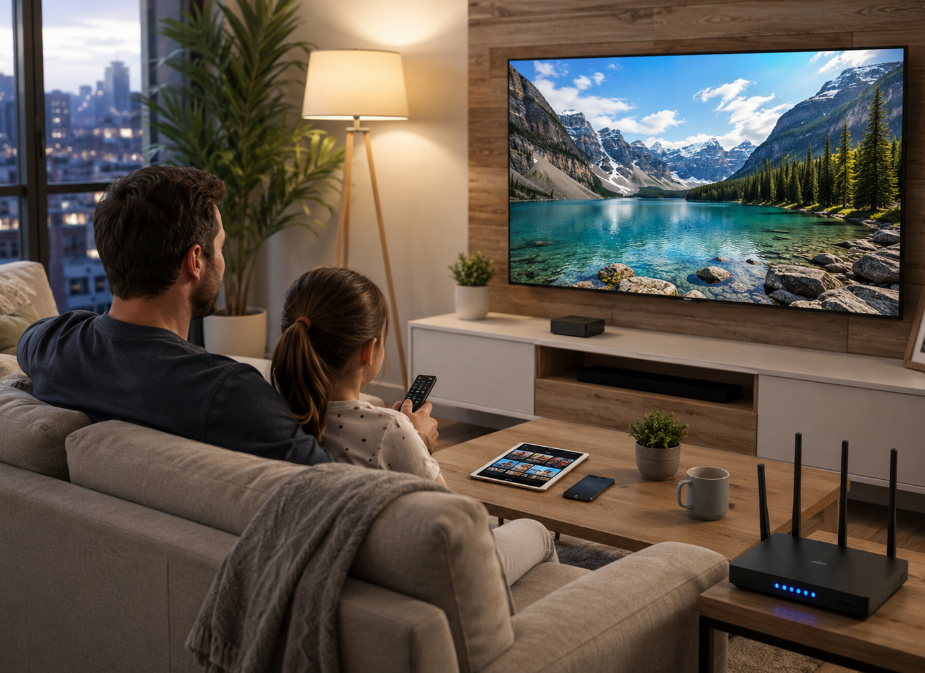
internet speed for IPTV isn’t a tech footnote—it’s the make-or-break factor when streams start stuttering and customers bail fast.
Ericsson Mobility Report and Deloitte research highlight rising streaming demand and quality gaps driving churn.
That’s why bandwidth planning, not guesswork, decides who scales and who stalls.
Harmony of Internet Speed for IPTV Essentials
Sweet Spot Bandwidth
➔ Sweet Spot Bandwidth: 30 Mbps ensures stable HD/4K via adaptive bitrate (HLS, MPEG-DASH), covering CDN variability and avoiding buffering in typical homes.
Key Performance Factors
➔ Key Performance Factors: QoS policies, low latency/jitter, packet-loss control, and multicast support maintain stream quality and scale concurrent channels efficiently.
Infrastructure Choice
➔ Infrastructure Choice: Fiber delivers symmetric throughput and low latency for multiple 4K streams; cable (DOCSIS) can suffice but risks congestion and higher latency during peaks.
Average Canadian Needs 30 Mbps For IPTV
For many Canadian homes, choosing the right internet plan for streaming is less about chasing huge numbers and more about consistency. A practical target is 30 Mbps, which supports smooth viewing, helps manage busy household traffic, and keeps the overall experience comfortable when using IPTV services such as Startiptv.
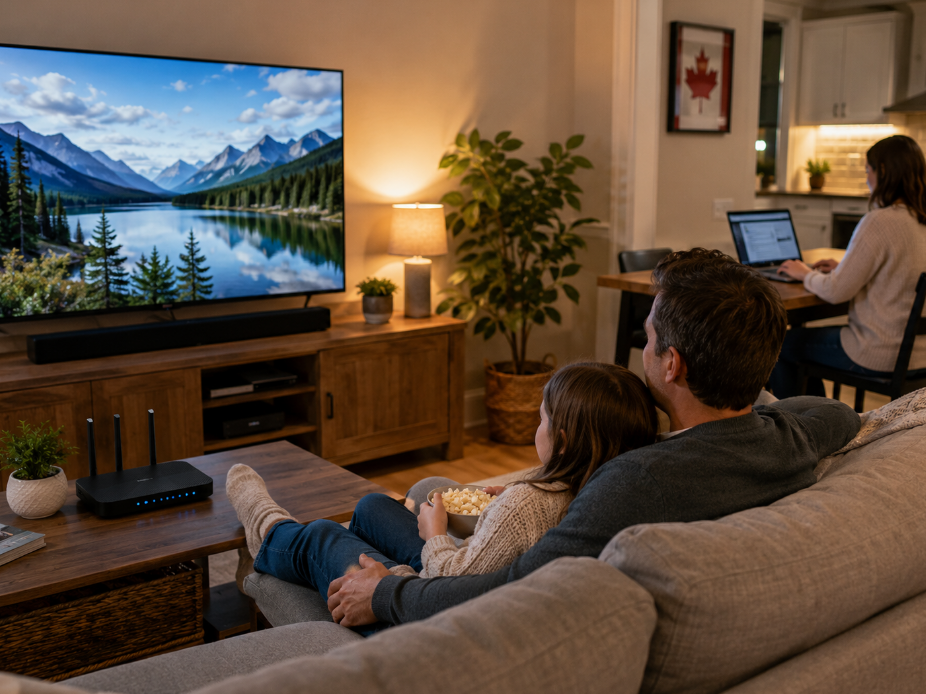
Why 30 Mbps Is the Sweet Spot for HD Streaming
Recent consumer broadband observations from organizations such as Ookla and industry reporting through 2024–2025 continue to show that consistent throughput often matters more than headline speed for uninterrupted video streaming.
The practical result is simple: internet speed for IPTV around 30 Mbps usually feels smooth in everyday use.
Router Capacity and Downlink Speed Requirements
A fast plan alone is not enough. The router capacity of the home network must match the service.
For users of Startiptv, the combination of a reliable internet connection and proper network requirements often has a bigger impact than upgrading to extremely high-speed packages. Good bandwidth management keeps internet speed for IPTV stable across devices.
Balancing Concurrent Streams with Codec Efficiency
4 Factors Affecting IPTV Internet Speed
Smooth viewing depends on more than raw bandwidth. The quality of internet speed for IPTV is shaped by routing, caching, stream delivery, and network behavior. Understanding these factors helps users compare IPTV internet speed, internet speed, and streaming speed expectations more realistically.

Bandwidth Allocation and Traffic Prioritization
A stable internet speed for IPTV often starts with effective Bandwidth control and smart Network management.
Latency, Jitter, and Packet Loss Impact
For internet speed for IPTV, speed alone is not enough. Low Latency keeps channel changes responsive. Minimal Jitter helps packets arrive at a predictable rhythm. Excessive Packet Loss can interrupt Real-time streaming, creating visible artifacts.
Key effects include:
Users often notice these issues even when advertised IPTV speed seems adequate.
CDN Edge Devices and Content Caching
Efficient content delivery relies on nearby infrastructure.
Multicast Support and Concurrent Stream Capacity
Network efficiency improves when identical live channels are shared intelligently.
Fiber Vs. Cable For IPTV Speed

Picking between fiber and cable can make a noticeable difference in streaming quality. For households comparing options, understanding how each handles internet speed for IPTV helps avoid buffering, lag, and quality drops during busy hours.
Fiber
When evaluating internet speed for IPTV, optical fiber is often the benchmark because data travels through light signals rather than traditional wiring.
| Connection Type | Download Speed (Mbps) | Latency (ms) |
|---|---|---|
| Entry Fiber | 300 | 5 |
| Mid-Tier Fiber | 1000 | 3 |
| Premium Fiber | 2000 | 2 |
For users focused on internet speed for IPTV, fiber leaves room for future growth without major infrastructure changes. Many subscribers using Startiptv services prefer fiber when several family members stream simultaneously. In practical terms, better IPTV speed often means fewer interruptions and smoother viewing throughout the day.
Cable
Cable internet relies on coaxial cable infrastructure and remains widely available, making it a common choice for homes seeking acceptable internet speed for IPTV without fiber access.
A quick way to evaluate cable performance:
Key factors affecting streaming quality include:
Cable connections generally deliver asymmetrical speeds, meaning downloads are faster than uploads. Data also travels through copper wires, which can introduce higher latency compared with fiber. Still, modern DOCSIS upgrades have narrowed the gap for many households.
For viewers using Startiptv, cable can support several HD streams comfortably when the local network is not heavily loaded. If internet speed for IPTV is your top priority, fiber usually wins on consistency. If availability and cost matter more, cable remains a practical option that can still provide solid speed for IPTV and dependable IPTV speed in everyday use.
FAQ
What internet speed for IPTV is usually enough for Canadian homes?
For many Canadian homes, around 30 Mbps is a practical target for internet speed for IPTV. It gives enough bandwidth for smooth HD streaming, helps manage busy household traffic, and supports stable playback when adaptive bitrate delivery adjusts video quality during normal network fluctuations.
Why does 30 Mbps work well for HD streaming and IPTV playback?
A 30 Mbps connection gives enough bandwidth for modern HD streaming and many 4K streams using adaptive delivery methods. When internet speed for IPTV stays near this level, CDN routing changes and peak-hour traffic are less likely to damage video quality or cause constant buffering.
Does router capacity affect IPTV internet speed?
Yes. A fast internet plan alone is not enough if the router capacity, downlink speed consistency, network device throughput, or Wi-Fi standard cannot support multiple active rooms. Proper network requirements and bandwidth management often matter more than simply upgrading to a very high-speed package.
How do HEVC and AV1 help with IPTV speed requirements?
Better video compression from HEVC and AV1 can lower data usage while preserving streaming quality at lower bitrates. This helps several concurrent streams run more comfortably on the same connection and allows internet speed for IPTV to serve more screens without noticeable slowdowns.
What network factors affect internet speed for IPTV?
IPTV speed is shaped by more than raw bandwidth. Important factors include Quality of Service rules, bandwidth allocation, traffic prioritization, consistent throughput, low latency, minimal jitter, packet-loss control, CDN edge delivery, content caching, and multicast support for concurrent streams.
How do latency, jitter, and packet loss hurt IPTV streaming quality?
Low latency keeps channel changes responsive, while minimal jitter helps packets arrive predictably. Excessive packet loss can interrupt real-time streaming, increase buffering, reduce video quality during live events, and create visible artifacts even when advertised IPTV speed looks adequate.
Why are CDN edge devices and content caching important for IPTV?
A CDN distributes media across many locations, while content caching stores frequently requested assets closer to viewers. Local edge devices shorten the delivery path, reduce dependence on a central server, and help internet speed for IPTV feel smoother during peak demand.
Is fiber better than cable for IPTV speed?
Fiber is usually stronger for internet speed for IPTV because it offers high speed, low latency, and symmetrical speeds that support multiple HD and 4K streams. Cable can still work well through DOCSIS technology, but shared network congestion, variable speeds, and asymmetrical upload/download performance may appear during busy hours.